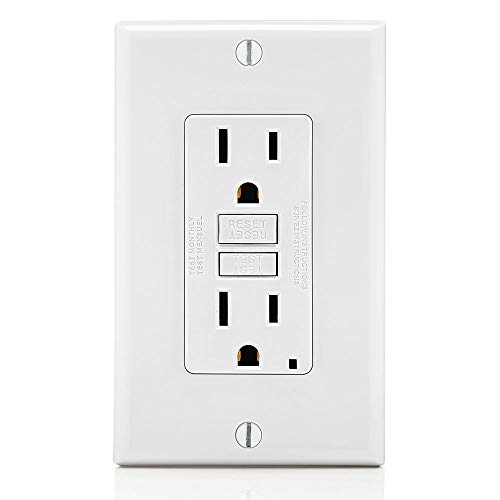
GFCI outlets are required by code near water — kitchens, bathrooms, garages, and outdoors. They shut off power instantly if they detect a ground fault, preventing electrocution. Replacing a failed one takes about 15 minutes.
STEP 1: Turn Off Power and Verify
Flip the breaker and confirm the outlet is dead using a non-contact voltage tester. Press the test and reset buttons on the existing GFCI — if it no longer trips or resets, it has failed and needs replacement.
STEP 2: Remove the Old GFCI Outlet
With that foundation in place, unscrew the cover plate and mounting screws. Pull the outlet out of the box. Note which wires connect to the LINE terminals (power coming in) and which connect to the LOAD terminals (power going out to downstream outlets). Mark them with tape if needed.
STEP 3: Connect the LINE Wires to the New GFCI
With those elements ready, attach the incoming hot (black) wire to the brass LINE terminal and the incoming neutral (white) wire to the silver LINE terminal. Connect the ground wire to the green screw. The LINE terminals are the ones that provide power to the GFCI itself — getting LINE and LOAD reversed is the most common installation error.
STEP 4: Connect LOAD Wires If Protecting Downstream Outlets
As you continue building on your progress, if additional outlets downstream are protected by this GFCI, connect their wires to the LOAD terminals. If this GFCI only protects itself, leave the LOAD terminals empty and cap the unused wires with wire nuts.
STEP 5: Mount, Test, and Label
To lock in your results for the long term, push the outlet into the box and tighten the mounting screws. Attach the cover plate. Restore power and press the RESET button — the outlet should power on. Press TEST — it should click and kill power. Press RESET again to confirm it restores. If any downstream outlets are GFCI-protected, apply the stickers included with the outlet.
PRO TIPS
Q: What is the difference between LINE and LOAD on a GFCI outlet?
A: The most common mistake is reversing the LINE and LOAD connections. LINE wires bring power into the GFCI — they usually come from the breaker panel. LOAD wires carry protected power out to other outlets. If the outlet does not reset, LINE and LOAD are probably swapped.
Q: Can one GFCI outlet protect other outlets downstream?
A: A single GFCI outlet can protect every standard outlet downstream on the same circuit. This is why you may have only one GFCI outlet in a bathroom but the other outlets in the room are also protected — they are wired on the LOAD side.
Q: How often should you test GFCI outlets?
A: GFCI outlets have a limited lifespan of about 10-15 years. Test yours monthly by pressing the TEST button. If it does not trip, replace it immediately — a GFCI that does not trip provides zero shock protection.
SUPPLIES NEEDED
GFCI outlet (15A or 20A to match circuit)
Non-contact voltage tester
Screwdrivers
Wire nuts
Electrical tape
GFCI cover plate
Products from Amazon

This site contains affiliate links. As an Amazon Associate I earn from qualifying purchases.