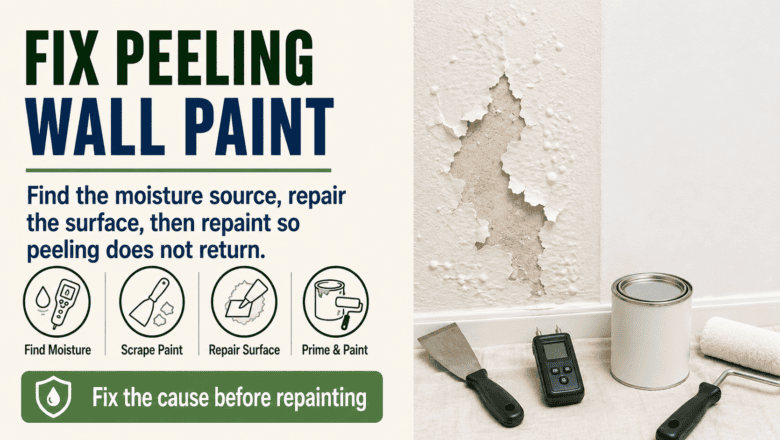
Peeling or bubbling paint is almost always caused by moisture or poor surface prep during the last paint job. Painting over the damage without fixing the root cause guarantees it will return.
STEP 1: Identify and Fix the Moisture Source
Check for leaks, condensation, or humidity issues behind the affected wall. Bathrooms and kitchens peel most often because of steam. Fix any leaks and improve ventilation before repainting — if the moisture source is not eliminated, the new paint will peel too.
STEP 2: Scrape Off All Loose and Peeling Paint
Building on that preparation, use a paint scraper or putty knife to remove every bit of loose, bubbling, or flaking paint down to a solid edge. Do not leave any partially attached paint — it will lift again and take the new paint with it. Scrape until only firmly bonded paint remains.
STEP 3: Sand the Edges Smooth
At this point, you are ready to sand the scraped area and the transition edges where old paint meets bare wall using 120-150 grit sandpaper. Feather the edges so there is no visible ridge between the painted and bare areas. Wipe away dust with a damp cloth and let dry completely.
STEP 4: Prime the Bare Areas
Taking this a step further, apply a coat of high-quality primer to all bare spots. Primer bonds to the wall surface and gives the topcoat something to grip. For moisture-prone areas, use a mold-resistant primer. Let it dry fully — typically 1-2 hours.
STEP 5: Apply Two Coats of Paint
The finishing touch makes all the difference. roll on two thin coats of paint, allowing full drying time between coats. Thin, even coats adhere better and resist peeling far longer than one thick coat. Feather the edges into the surrounding painted area so the repair blends seamlessly.
PRO TIPS
Q: Why is my paint peeling off the bathroom wall?
A: If paint is peeling in a bathroom, the most common fix is installing or upgrading the exhaust fan and running it for 20 minutes after every shower. No amount of primer will overcome ongoing steam exposure.
Q: Can I paint over peeling paint?
A: Never paint over glossy surfaces without sanding or using a liquid deglosser first. Paint will not bond to a slick surface and will peel within months regardless of the paint quality.
Q: What primer stops paint from peeling?
A: Use a bonding primer like Zinsser Bulls Eye 1-2-3 or KILZ Adhesion on problem walls. These primers are specifically formulated to grip difficult surfaces where standard primers fail.
SUPPLIES NEEDED
Paint scraper or putty knife
120-150 grit sandpaper
Bonding primer
Paint roller and tray
Paint matching existing wall color
Damp cloth for dust removal
Drop cloth
Products from Amazon

This site contains affiliate links. As an Amazon Associate I earn from qualifying purchases.


