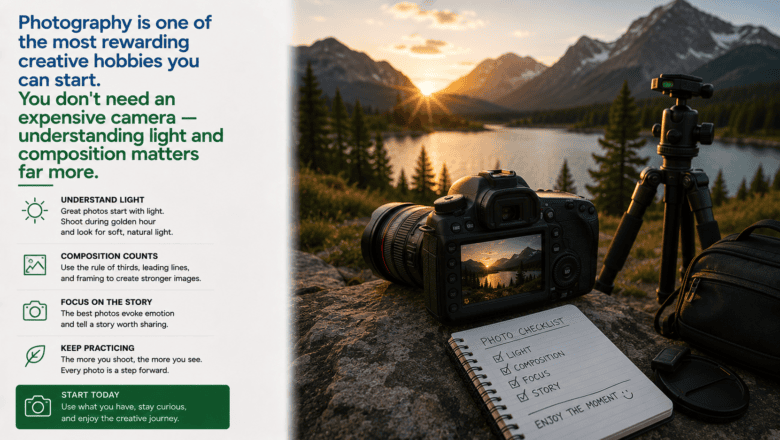
Photography is one of the most rewarding creative hobbies you can start. You don’t need an expensive camera — understanding light and composition matters far more.
STEP 1 — Start With the Camera You Already Have
Before buying any gear, shoot with your smartphone for a month. Modern smartphones take exceptional photos and mastering composition, light, and timing on a phone teaches the fundamentals that make you better with any camera. Most beginners benefit far more from improving their eye than upgrading their equipment.
STEP 2 — Learn the Three Core Exposure Settings
On any camera beyond auto mode, three settings control exposure. Aperture controls how much light enters and affects depth of field — a wide aperture blurs backgrounds beautifully. Shutter speed controls how long light hits the sensor and affects motion blur. ISO controls sensor sensitivity and affects noise in low light. Learning how these three interact is the foundation of all photography.
STEP 3 — Master Light Before Anything Else
Good light makes an average camera produce stunning results. Bad light makes an expensive camera produce disappointing results. The golden hours — the hour after sunrise and the hour before sunset — produce the most flattering, warm, directional light for almost any subject.
STEP 4 — Learn Composition Fundamentals
The rule of thirds divides your frame into a 3×3 grid and places your subject at intersection points rather than dead center. Leading lines draw the eye into the frame. Filling the frame eliminates distracting backgrounds. Study these and your photos improve immediately without any gear change.
STEP 5 — Shoot in RAW Format if Possible
If your camera or advanced smartphone app supports RAW format, use it rather than JPEG. RAW files contain far more image information and give you dramatically more control when editing — you can recover shadows, adjust highlights, and correct white balance in ways JPEG cannot handle.
STEP 6 — Edit Your Photos to Complete the Image
Photography is a two-step process: capture and edit. Free apps like Lightroom Mobile or Snapseed let you adjust exposure, contrast, color, and sharpness. Even small adjustments to brightness and color transform a good photo into a great one.
Pro Tip
Q: What is the best tip for someone learning to get Started with Photography?
A: The best camera is the one you have with you. Carry your camera everywhere for at least a month — the habit of always shooting is more valuable than any gear upgrade. Delete ruthlessly and only keep your best 5-10 percent from each shooting session.
SUPPLIES NEEDED
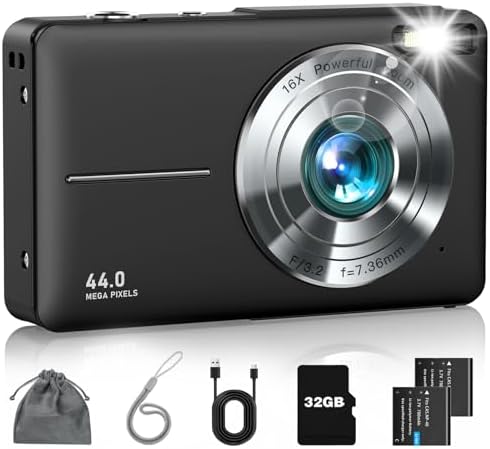
Camera — smartphone, point-and-shoot, or entry-level mirrorless
Extra memory card
Camera bag or strap
Photo editing app
Products from Amazon

This site contains affiliate links. As an Amazon Associate I earn from qualifying purchases.