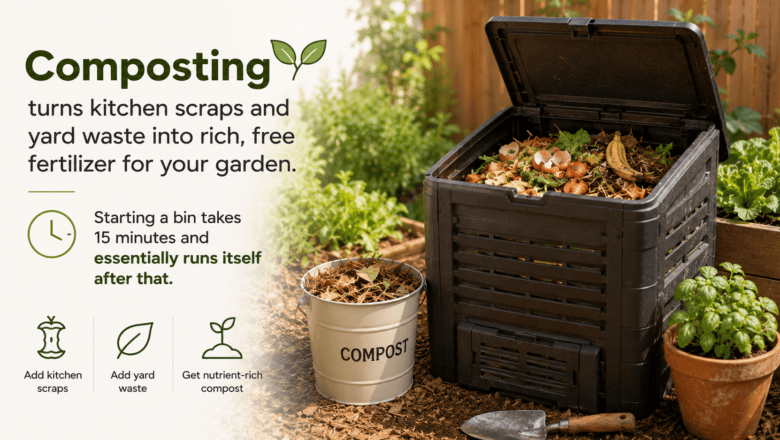
Composting turns kitchen scraps and yard waste into rich, free fertilizer for your garden. Starting a bin takes 15 minutes and essentially runs itself after that.
STEP 1 — Choose Your Composting Method
You have three main options. A simple open pile works but takes longer to break down. A three-bin system is efficient and lets you turn compost between stages. A tumbler composter is fast and pest-resistant but more expensive. For beginners, a single enclosed plastic bin is the easiest starting point.
STEP 2 — Pick the Right Location
Place your bin in a spot that gets partial sun, is convenient to reach from the kitchen, and has good drainage. Direct full sun speeds decomposition but dries out the pile faster. Avoid placing it directly against a wood fence or structure.
STEP 3 — Understand Browns and Greens
Successful compost needs a balance of carbon-rich brown materials and nitrogen-rich green materials in roughly a 3 to 1 ratio. Browns include dried leaves, cardboard, paper, and straw. Greens include vegetable scraps, coffee grounds, grass clippings, and fresh plant material.
STEP 4 — Build Your First Pile
Start with a 4-inch layer of coarse brown materials at the bottom for airflow. Add a 4-inch layer of greens, then another layer of browns. Continue alternating, lightly watering each layer so the pile feels as damp as a wrung-out sponge throughout.
STEP 5 — Maintain and Turn Regularly
Turn the pile with a garden fork every 1-2 weeks, bringing outer material to the center where the heat is highest. A well-maintained pile heats to 130-160 degrees Fahrenheit, killing weed seeds and pathogens. Keep moist but never waterlogged.
STEP 6 — Know When Compost Is Ready
Finished compost looks dark brown, smells earthy like forest soil, and original materials are no longer recognizable. This typically takes 2-6 months. Use it by mixing 2-3 inches into garden beds before planting.
Pro Tip
Q: What is the best tip for someone learning to start a Compost Bin?
A: Chop or shred materials into smaller pieces before adding to your pile — smaller pieces decompose dramatically faster. Running kitchen scraps through a blender with a little water before adding to the pile speeds the process significantly.
SUPPLIES NEEDED
Compost bin or simple wooden pallet frame
Brown materials — dried leaves and cardboard
Green materials — fruit and vegetable scraps
Garden fork or compost aerator
Water source nearby
Products from Amazon

This site contains affiliate links. As an Amazon Associate I earn from qualifying purchases.