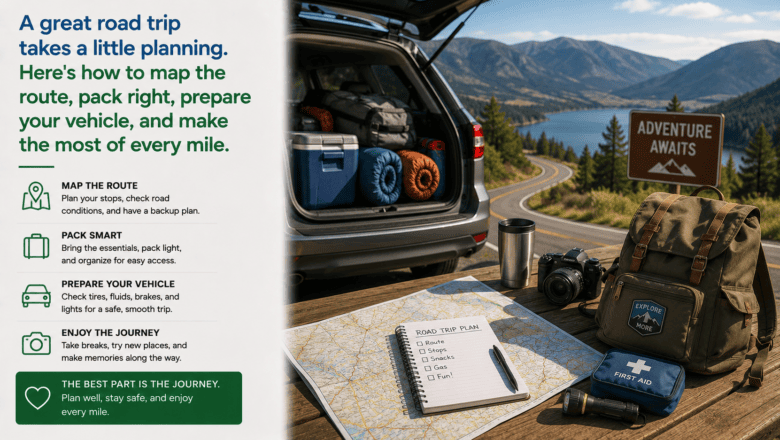
A great road trip takes a little planning. Here’s how to map the route, pack right, prepare your vehicle, and make the most of every mile.
STEP 1 — Define Your Goal and Route
Start by deciding whether your trip is destination-focused or journey-focused where the drive itself is the experience. Choose a general direction or destination, then identify 3-5 anchor stops along the way rather than planning every hour in advance.
STEP 2 — Estimate Realistic Daily Drive Times
A comfortable maximum for most drivers is 6-8 hours of driving per day covering 350-450 miles. Build in stops every 2-3 hours for fuel, food, and leg stretching. Overestimating daily miles is the most common road trip mistake and leads to exhaustion and missed experiences.
STEP 3 — Book Accommodations at Key Stops
For popular destinations especially in summer, book at least your first and last night accommodations well in advance. Middle nights can be more flexible. Mix hotels, motels, campgrounds, and Airbnb options to keep the trip interesting and the budget balanced.
STEP 4 — Prepare the Vehicle
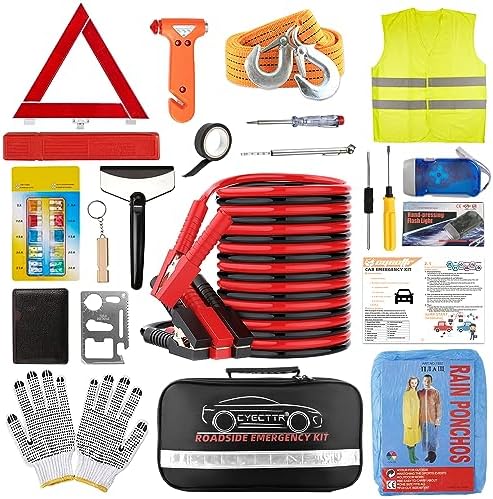
Get an oil change if within 2,000 miles of one being due. Check tire pressure and tread depth, all fluid levels, windshield wipers, and headlights. Pack a basic car emergency kit including jumper cables, a flashlight, a first aid kit, and reflective triangles. A roadside assistance membership like AAA provides significant peace of mind.
STEP 5 — Pack Smart for the Car
Organize gear into soft duffel bags rather than hard suitcases that are difficult to pack efficiently into a trunk. Keep a separate day bag with items you need during the drive — snacks, chargers, camera, and a light jacket — so you are not digging through luggage at every stop.
STEP 6 — Download Offline Maps and Entertainment
Cell service is unreliable in rural areas that make up a lot of the most scenic drives. Download offline maps in Google Maps or Gaia GPS before leaving. Download podcasts, playlists, and audiobooks — they transform long drives into genuinely enjoyable time.
Pro Tip
Q: What is the best tip for someone learning to plan a Road Trip?
A: Leave buffer days in your itinerary. The best road trip experiences are often unexpected — a roadside farm stand, a scenic overlook, a small town diner with a local recommendation. A rigid schedule makes you rush past the best parts.
SUPPLIES NEEDED
Reliable vehicle with recent oil change and tire check
Road atlas or offline GPS maps
Cooler for drinks and snacks
Car emergency kit
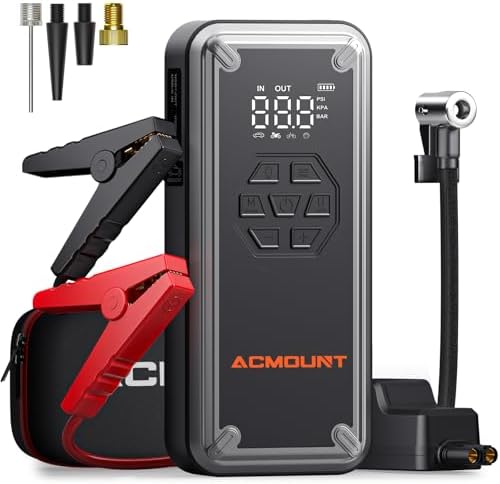
Portable phone charger
Products from Amazon

This site contains affiliate links. As an Amazon Associate I earn from qualifying purchases.