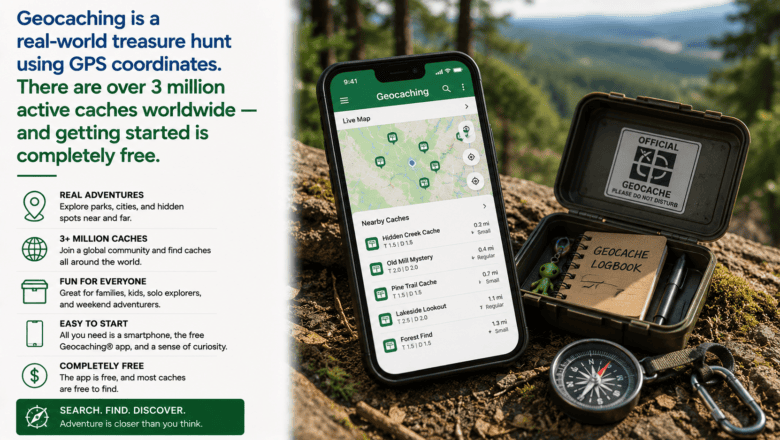
Geocaching is a real-world treasure hunt using GPS coordinates. There are over 3 million active caches worldwide — and getting started is completely free.
STEP 1 — Create a Free Geocaching Account
Sign up for a free account at Geocaching.com or download the official Geocaching app. The free membership gives you access to traditional caches which are the most common type and a great starting point for complete beginners.
STEP 2 — Find Your First Cache
Open the app and look at the map near your location — you will likely be surprised by how many caches are hidden within a mile of where you are right now. Filter for Difficulty 1 and Terrain 1 caches to start. These are the most accessible and designed for complete beginners.
STEP 3 — Navigate to the Coordinates
The app guides you toward the cache location using GPS coordinates. As you get within 30-50 feet, GPS accuracy limits take over and you need to start looking carefully. Read the cache description for hints about container size and hiding spot type.
STEP 4 — Find and Sign the Log
Caches range in size from nano caches the size of a fingertip to large containers. Most traditional caches contain a paper log for finders to sign and date. Larger caches also contain small trinkets to trade — if you take an item, leave one of equal or greater value.
STEP 5 — Log Your Find Online
After finding the cache, log your find in the app. Write a brief note about your experience. Cache owners love to hear about successful finds and it helps other geocachers know the cache is in good condition. This is a core part of the geocaching community culture.
STEP 6 — Try Different Cache Types
Once you have found a few traditional caches, branch out to mystery caches with puzzles to solve before getting coordinates, multi-caches that send you to multiple waypoints, and Earth caches at notable geological features.
Pro Tip
Q: What is the best tip for someone learning to get Started with Geocaching?
A: Search geocaching forums and local Facebook groups for your area — experienced geocachers often share non-spoiler tips for particularly tricky local caches and organize Cache In Trash Out cleanup events that combine geocaching with environmental stewardship.
SUPPLIES NEEDED
Smartphone with Geocaching app or GPS device
Small trinkets for trading
Pen for signing physical logs