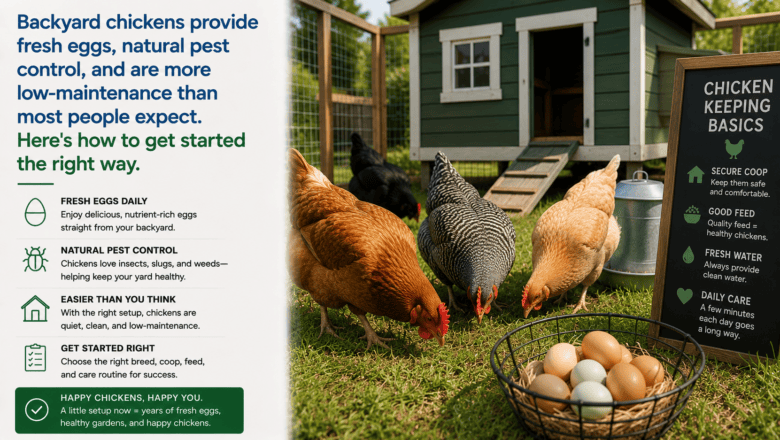
Backyard chickens provide fresh eggs, natural pest control, and are more low-maintenance than most people expect. Here’s how to get started the right way.
STEP 1 — Check Local Regulations First
Many cities and HOAs have rules about backyard chickens including flock size limits, rooster prohibitions, and setback distances from property lines. Check with your local zoning office or municipality before buying anything. This step saves significant headaches later.
STEP 2 — Choose the Right Breed for Beginners
For egg production, Rhode Island Reds, Plymouth Rocks, and Australorps are docile, cold-hardy, and consistent layers of 200-300 eggs per year per hen. Avoid roosters unless you specifically want them — they are noisy and not needed for hens to lay eggs.
STEP 3 — Size Your Coop Correctly
The general rule is 4 square feet of coop space per chicken inside and 10 square feet per chicken in the outdoor run. A flock of 4 hens needs a 16-square-foot coop minimum and a 40-square-foot run. Overcrowding leads to pecking, stress, and disease.
STEP 4 — Set Up the Coop Interior
Install roosting bars at least 2 inches wide for chickens to sleep on. Add one nesting box for every 3-4 hens filled with clean straw or shavings. Nest boxes should be 12×12 inches, dark, and positioned lower than the roosting bars so hens are not tempted to sleep in them.
STEP 5 — Secure Against Predators
Use hardware cloth — not chicken wire which predators can tear through — on all openings. Bury the run fencing at least 12 inches underground to prevent digging predators. Add a secure latch requiring two steps to open as raccoons can open simple latches.
STEP 6 — Establish a Daily Care Routine
Daily care takes about 15 minutes. Collect eggs each morning to prevent hens from becoming broody. Refresh feed and clean the waterer. Do a quick visual check that all birds look healthy. Weekly, replace bedding as needed and clean feeders.
Pro Tip
Q: What is the best tip for someone learning to start a Backyard Chicken Coop?
A: Start with 3-4 hens rather than a larger flock while you learn the routine. Four hens typically produce 3-4 eggs per day in peak laying season — more than enough for a household and wonderful for sharing with neighbors.
SUPPLIES NEEDED
Chicken coop sized for your flock
Chicken run or fencing
Feeder and waterer
Bedding such as pine shavings
Layer feed
Heat lamp for chicks
Products from Amazon

This site contains affiliate links. As an Amazon Associate I earn from qualifying purchases.