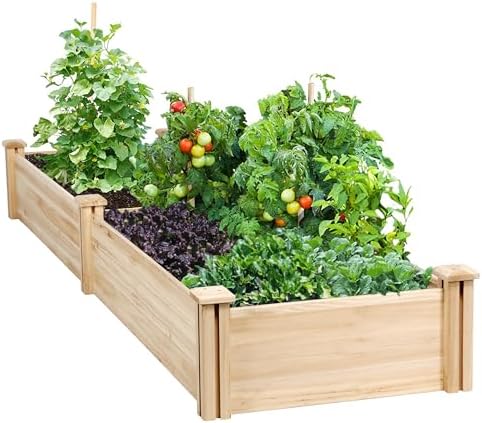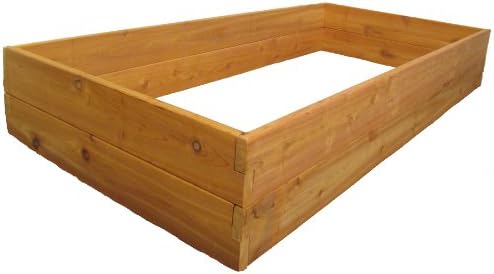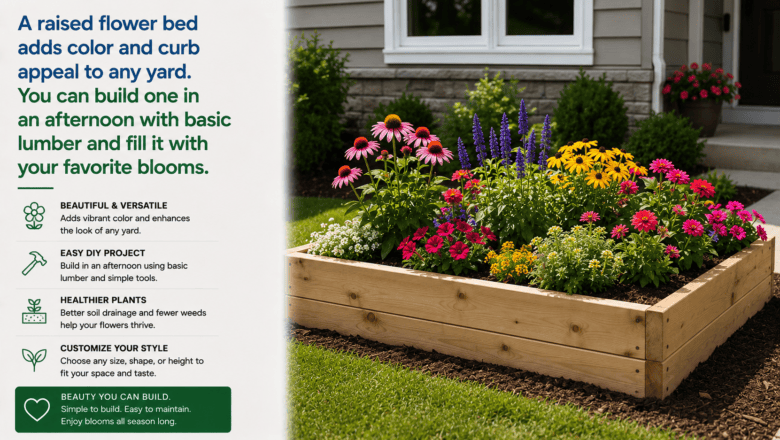
A raised flower bed adds color and curb appeal to any yard. You can build one in an afternoon with basic lumber and fill it with your favorite blooms.
STEP 1 — Choose Your Location and Size
Pick a spot that gets the right light for your chosen flowers — most flowering plants prefer 6 or more hours of sun per day. Plan a bed no wider than 4 feet so you can reach the center without stepping in. Common sizes are 4×4, 4×8, or 4×12 feet. Mark the outline with stakes and string before building.
STEP 2 — Select Your Lumber
Cedar is the gold standard for raised beds because it naturally resists rot and insects without chemical treatment. Untreated pine is less expensive and lasts 3-5 years. Avoid pressure-treated lumber for beds where you might later grow food. 2×6 boards give a bed about 5.5 inches of depth.
STEP 3 — Cut and Assemble the Frame
Cut boards to length or have them cut at the hardware store. Assemble corners by overlapping boards and driving 3-inch exterior screws through the joints, or use metal corner brackets for extra strength. Predrill all holes to prevent the wood from splitting.
STEP 4 — Prepare the Ground
Place the assembled frame in your chosen location. Lay cardboard or newspaper on the ground inside the frame to smother grass and weeds — it will decompose over time. Lay weed barrier fabric on top and staple it to the inside of the frame.
STEP 5 — Fill With Soil
Fill with a mixture of topsoil, compost, and a small amount of perlite for drainage. A common blend is 60 percent topsoil, 30 percent compost, and 10 percent perlite. Fill to about 1 inch below the top of the frame to prevent soil from washing over the edge when watering.
STEP 6 — Plant and Mulch
Plant flowers according to their spacing requirements, placing taller varieties at the back and shorter ones toward the front. Water thoroughly after planting. Apply a 2-inch layer of bark mulch around plants to retain moisture, regulate soil temperature, and suppress weeds.
Pro Tip
Q: What is the best tip for someone learning to build a Raised Flower Bed?
A: Choose a mix of early, mid, and late season blooming flowers so your bed has color from spring through fall. Perennials come back year after year and are the most economical choice long term, while annuals give a full season of intense color for a very low per-plant cost.
SUPPLIES NEEDED
Cedar or pine boards 2×6 or 2×8 inches
Corner brackets or wood screws
Weed barrier fabric
Garden soil and compost
Annual or perennial flower plants or seeds
Products from Amazon

This site contains affiliate links. As an Amazon Associate I earn from qualifying purchases.