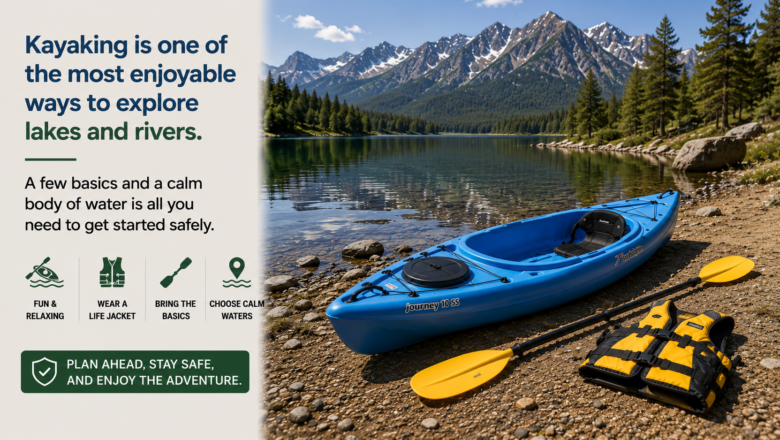
Kayaking is one of the most enjoyable ways to explore lakes and rivers. A few basics and a calm body of water is all you need to get started safely.
STEP 1: Choose the Right Kayak for Beginners
For beginners, a recreational sit-in kayak 10-12 feet long offers the best stability and ease of maneuvering on calm water. Sit-on-top kayaks are even easier to get in and out of and are ideal for warmer weather. Avoid long touring or whitewater models until you build your foundational skills.
STEP 2: Always Wear Your PFD Life Jacket
Always wear your personal flotation device — do not just keep it in the kayak. By law every person must have a properly fitted life jacket accessible. On open water or any river, wearing it is non-negotiable regardless of how well you can swim.
STEP 3: Learn to Enter the Kayak Safely
At a dock, place the kayak parallel to the edge, step in one foot at a time while holding the dock, then lower yourself into the seat. From a beach, set the kayak in shallow water, straddle it, and slide into the cockpit while pushing off with your paddle.
STEP 4: Master the Basic Forward Stroke
Hold the paddle with hands slightly wider than shoulder-width. Submerge the blade fully near your feet, pull it back alongside the hull to your hip, then exit the water cleanly. Alternate sides with each stroke. Your power should come from torso rotation, not just your arms.
STEP 5: Practice Steering and Stopping
To turn, take several consecutive strokes on the opposite side from the direction you want to go. For a sweep turn, plant the blade near the bow and sweep it wide toward the stern. To stop, drag the paddle blade flat against the surface of the water.
PRO TIP
Q: Where’s the best place to start kayaking for the first time?
A: Flat, calm water — a sheltered pond or bay is perfect for a first session.
Q: Should I tell anyone before I head out?
A: Yes — share your float plan with someone. Let them know where you’re going and when you expect to return, before you launch.
Q: How can I make the carry from car to water easier?
A: A kayak cart makes it much easier.
SUPPLIES NEEDED
Recreational kayak — sit-in or sit-on-top for beginners
Adjustable paddle sized to your height
PFD personal flotation device — required by law
Dry bag for your phone and keys
Water shoes or sandals with straps
Sunscreen and a hat
Products from Amazon

This site contains affiliate links. As an Amazon Associate I earn from qualifying purchases.


