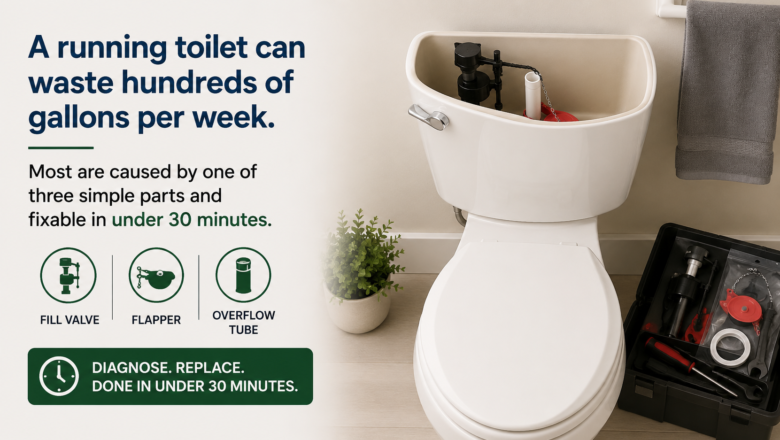
A running toilet wastes up to 200 gallons of water per day — silently adding $50-100 or more to your monthly water bill. Fortunately, fixing a running toilet is one of the simplest home repairs and almost always involves replacing a $5-10 flapper or adjusting the fill valve, with no special skills or tools required. Learning how to fix a running toilet yourself saves the $150-250 a plumber would charge for a repair that typically takes less than 15 minutes.
STEP 1: Identify What Is Causing the Running
Remove the tank lid and observe what is happening inside. The two most common causes are a worn flapper (the rubber seal at the bottom of the tank that leaks water into the bowl) and a fill valve that does not shut off (water continuously flows into the tank and out the overflow tube). Identifying which component is failing tells you exactly what to fix.
STEP 2: Check and Replace the Flapper If It Is Worn
Now that you have the starting point, the flapper is the culprit about 80 percent of the time. Press down on the flapper with your finger — if the running stops, the flapper is not sealing properly. Turn off the water supply valve behind the toilet, flush to empty the tank, unhook the old flapper from the overflow tube, and snap a new universal flapper ($5-8 at any hardware store) into place. Turn the water back on and test.
STEP 3: Adjust the Water Level If It Is Too High
Moving forward with confidence, if water is flowing over the top of the overflow tube, the tank water level is set too high. Look for an adjustment screw on the fill valve — turning it clockwise lowers the water level. The correct level is about 1 inch below the top of the overflow tube. Adjusting this stops the constant running caused by excess water draining down the overflow.
STEP 4: Replace the Fill Valve If Adjusting Does Not Help
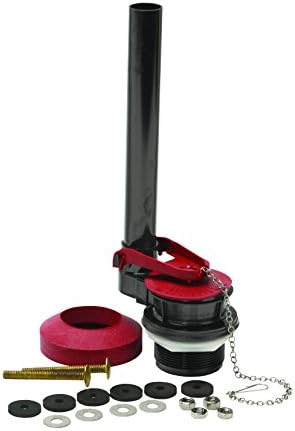
As you continue building on your progress, if the fill valve continues running after adjustment, it needs replacement. Universal fill valve kits ($10-15) fit virtually all toilets. Turn off the water supply, flush and sponge out remaining water, disconnect the water supply line, unscrew the old valve, install the new one following the kit instructions, reconnect the water line, and adjust the float height.
STEP 5: Test Your Repair and Check for Silent Leaks
To lock in your results for the long term, turn the water back on and let the tank fill completely. The water should fill to the correct level and stop. Flush and confirm the tank fills and stops again. To check for a silent leak you cannot hear, add a few drops of food coloring to the tank water. Wait 15 minutes without flushing — if color appears in the bowl, the flapper is still leaking and needs further adjustment or replacement.
PRO TIPS
Q: Why does my toilet run for a few seconds randomly throughout the day?
A: This intermittent running — sometimes called phantom flushing — is almost always caused by a slowly leaking flapper. The flapper allows small amounts of water to seep from the tank into the bowl. When the tank level drops enough, the fill valve activates briefly to refill. Replacing the flapper for $5-8 eliminates the problem and the wasted water immediately.
Q: How much water does a running toilet actually waste?
A: A constantly running toilet can waste 200 gallons per day or 6,000 gallons per month. Even a slow, silent leak wastes 30-50 gallons per day. At average water rates, a running toilet adds $30-100 per month to your water bill. A $5 flapper replacement pays for itself within a single day of water savings.
Q: Do I need to turn off the water supply before fixing a running toilet?
A: Yes — turn the shutoff valve (located on the wall behind the toilet) clockwise until it stops. Then flush to drain the tank. This prevents water from refilling while you work. If the shutoff valve is stuck or does not close fully, turn off water at the main supply to the house and plan to replace the shutoff valve as well.
SUPPLIES NEEDED
Universal toilet flapper ($5-8)
Universal fill valve kit ($10-15, if needed)
Adjustable wrench
Sponge for remaining tank water
Food coloring for leak testing
Towel for drips
Products from Amazon

This site contains affiliate links. As an Amazon Associate I earn from qualifying purchases.