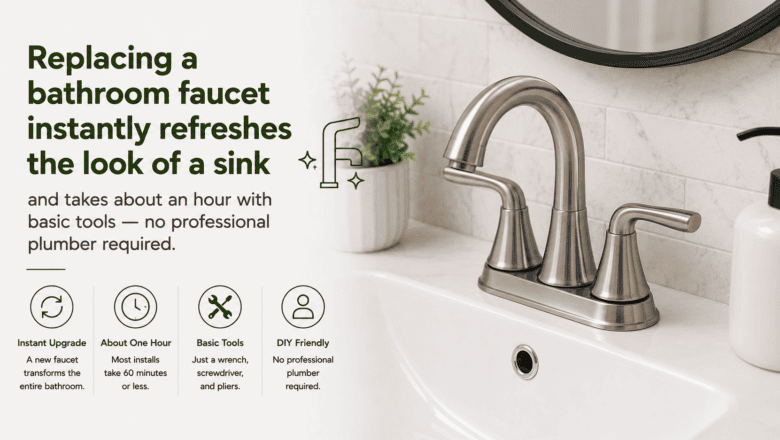
Replacing a bathroom faucet instantly updates the look of your entire vanity — transforming a dated or corroded fixture into a fresh, modern focal point for about $50-150 in materials and an hour of your time. Learning how to replace a bathroom faucet yourself is one of the most visually impactful DIY plumbing projects because the faucet is the fixture you see and touch most often in the bathroom. The job requires only basic tools, no soldering, and the confidence to turn off the water and work under the sink.
STEP 1: Choose a New Faucet That Fits Your Sink
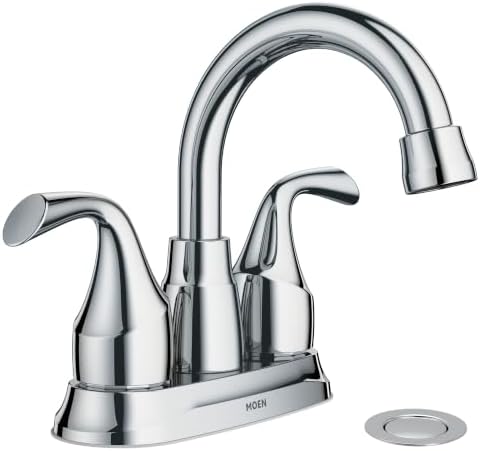
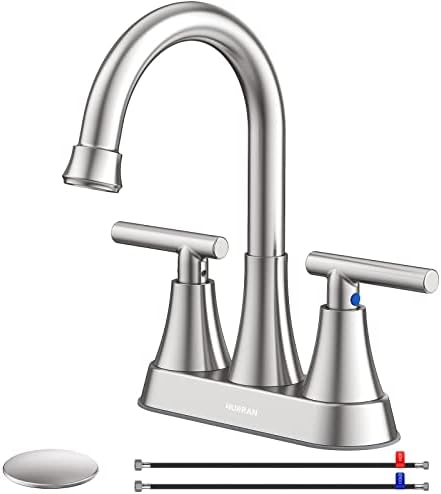
Before purchasing a new faucet, check the number of holes in your sink or vanity top. Single-hole sinks need single-hole or single-handle faucets. Three-hole sinks (two handles and one spout) need widespread or centerset faucets. Measure the distance between the outer holes if you have three holes — standard spacing is either 4 inches (centerset) or 8 inches (widespread). Buying the wrong configuration means the faucet physically will not fit.
STEP 2: Turn Off the Water Supply and Disconnect the Old Faucet
With your new faucet ready, shut off the hot and cold water supply valves located under the sink by turning them clockwise. Open the old faucet to release remaining water pressure. Place a bucket under the connections to catch residual water. Using an adjustable wrench or basin wrench, disconnect the supply lines from the faucet tailpieces and remove the mounting nuts holding the faucet to the sink.
STEP 3: Remove the Old Faucet and Clean the Sink Surface
With those elements ready, lift the old faucet out from above. Clean the sink surface thoroughly — removing old putty, caulk, mineral deposits, and grime that accumulated under the old faucet. A clean surface ensures the new faucet sits flush and the gasket or putty creates a watertight seal.
STEP 4: Install the New Faucet Following the Manufacturer’s Instructions
With the main work complete, place the new faucet’s gasket or a ring of plumber’s putty on the sink surface and set the faucet through the mounting holes from above. From below, hand-tighten the mounting nuts to secure the faucet — then snug with a wrench without overtightening, which can crack the sink. Connect the new supply lines (braided stainless steel lines are the most reliable) to the faucet tailpieces and to the shutoff valves.
STEP 5: Turn On the Water, Check for Leaks, and Clean Up
To bring everything together and finish strong, slowly open both shutoff valves. Check every connection point for leaks — supply line fittings, faucet base, and drain connections. Tighten any connection that drips slightly. Run both hot and cold water for a minute to flush the lines. Remove the faucet aerator and flush again to clear any debris that could clog the screen. Replace the aerator, wipe down the new faucet, and enjoy your upgraded bathroom.
PRO TIPS
Q: Do I need a plumber to replace a bathroom faucet?
A: For a standard faucet swap where you are replacing an existing faucet with a new one using the same hole configuration, most homeowners can complete this themselves in about an hour. If you need to modify plumbing, change pipe sizes, or the shutoff valves are corroded and need replacement, a plumber may be worthwhile for those additional complications.
Q: What is the hardest part of replacing a bathroom faucet?
A: Working in the cramped space under the sink to remove old mounting nuts and connect new supply lines. A basin wrench ($10-15) is designed specifically for this — its swiveling jaw reaches up behind the sink to grip nuts that a standard wrench cannot reach. This single tool makes the entire job dramatically easier.
Q: How do I know what size supply lines to buy for my new faucet?
A: Most modern bathroom faucets use 3/8-inch compression fittings. Most shutoff valves also use 3/8-inch connections. Buy braided stainless steel supply lines in the correct length (measure from the faucet tailpiece to the shutoff valve and add 2-3 inches). Braided stainless lines are flexible, durable, and far less likely to fail than rigid chrome or plastic lines.
SUPPLIES NEEDED
New bathroom faucet matching your sink hole configuration
Adjustable wrench and basin wrench
Braided stainless steel supply lines
Plumber’s putty or included gasket
Bucket and towels for water drips
Teflon tape for threaded connections
Products from Amazon

This site contains affiliate links. As an Amazon Associate I earn from qualifying purchases.
![[2-Pack] PROCURU 16-Inch (1.3Ft) x 3/8" Comp x 1/2" FIP Faucet Ho...](https://m.media-amazon.com/images/I/41ni88AwPxL._AC_.jpg)