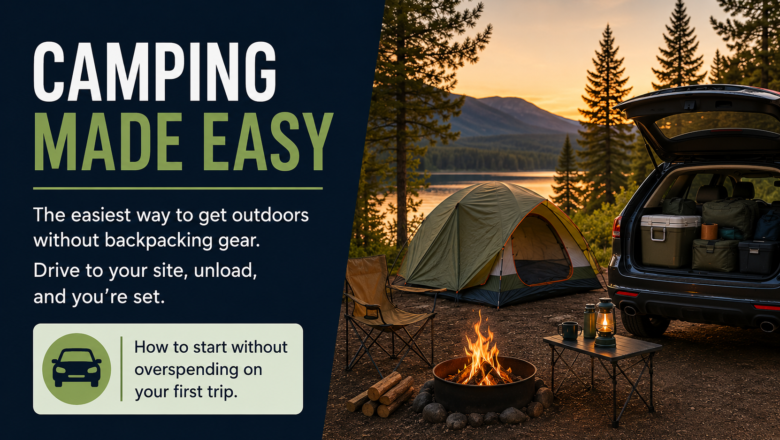
Camping where you can drive a car is the easiest way to get outdoors without committing to backpacking gear. You drive to your site, unload, and you’re set up. Here’s how to start without overspending on your first trip.
Step 1: Pick a Beginner-Friendly Site
Look for established campgrounds with drive-up sites, since these usually have flat ground, fire rings, and nearby restrooms. State parks are often the best value and easiest to book for a first trip.
Step 2: Pack Smart, Not Heavy
Since you’re camping where you can drive to (not hiking in), weight isn’t a major concern — organization is. Use bins instead of loose bags so gear doesn’t get lost or crushed in the trunk. Pack food in a separate cooler from drinks, so it doesn’t get raided every time someone wants water.
Step 3: Set Up Camp Before Dark
Arrive with enough daylight to pitch your tent, organize your camp kitchen, and locate the bathroom. Setting up in the dark is the most common source of first-trip frustration.
Step 4: Keep the Kitchen Simple
A two-burner propane stove handles almost everything: warm up water for hot chocolate, cooking eggs, pasta, grilled sandwiches, and warming up food. You can pre-chop vegetables and pre-portion meals at home to cut down on cleanup and decision fatigue at the site.
Step 5: Practice Food and Trash Safety
Store food and scented items in your car or a sealed cooler overnight, not in your tent. This keeps wildlife away and is required at most campgrounds anyway.
Pro Tips
Q: Should I set up my tent before the trip?
A: Yes—test-pitch it in your backyard first, so you’re not learning how it works for the first time on-site.
Q: How much water should I bring?
A: More than you think you need.
Q: Do I need anything under the tent?
A: A cheap tarp under the tent footprint is a good idea—it extends the tent’s life and keeps moisture out.
SUPPLIES NEEDED
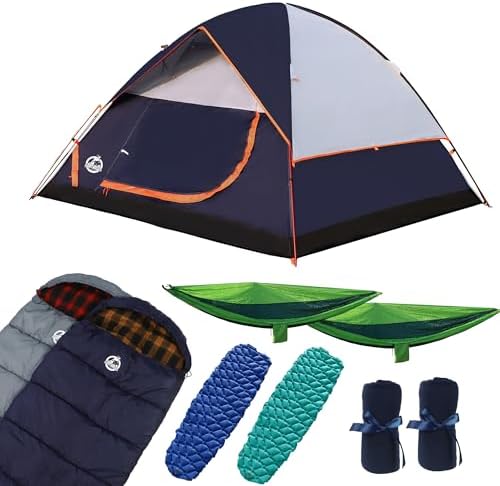
3-season tent
Sleeping bags rated for the season
Sleeping pads or air mattress
Cooler
Camp stove or grill
Headlamp or lantern
Basic first aid kit
Products from Amazon

This site contains affiliate links. As an Amazon Associate I earn from qualifying purchases.